
African Padauk (Pterocarpus Soyauxii) Bark Extract
African Padauk Alcohol-FREE Liquid Extract, African Padauk (Pterocarpus Soyauxii) Dried Bark Glycerite
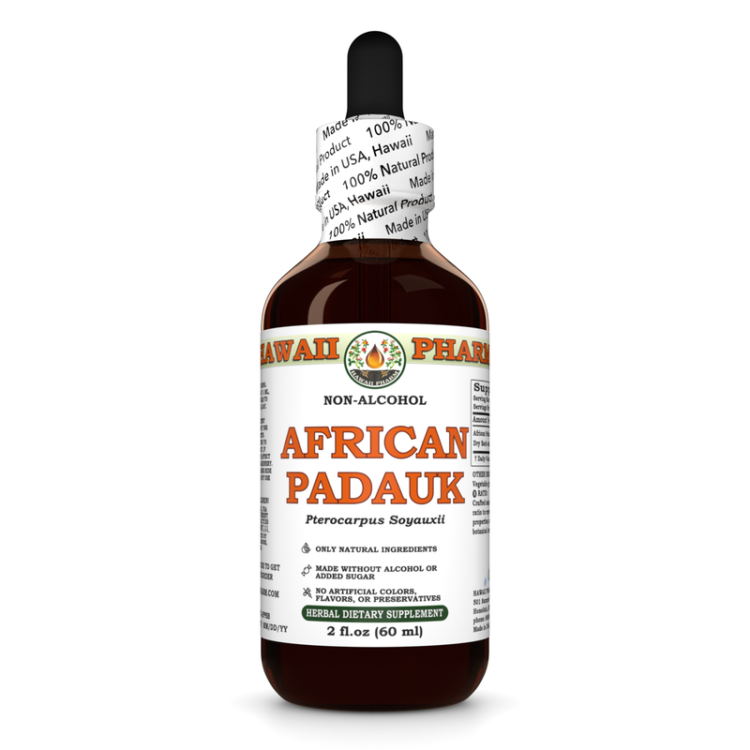
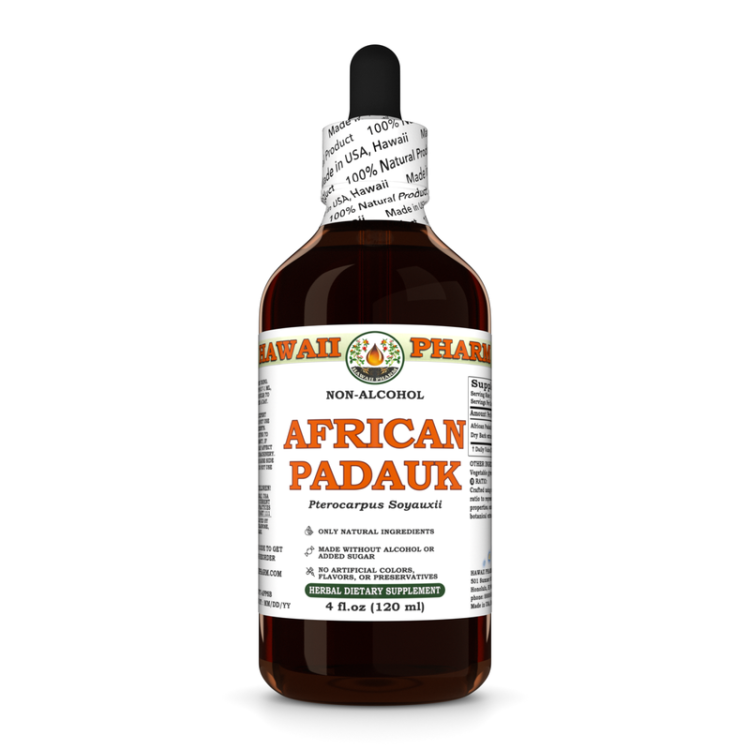
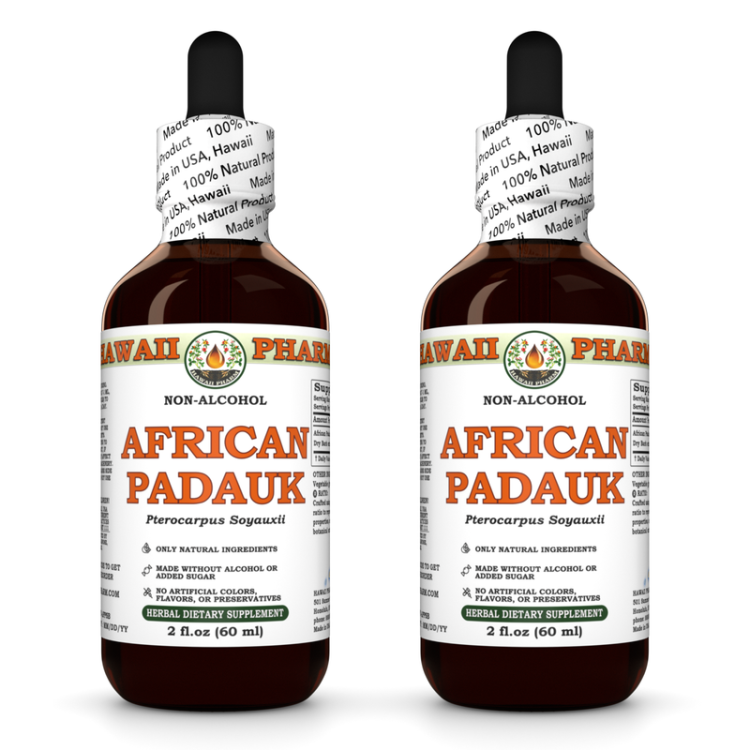
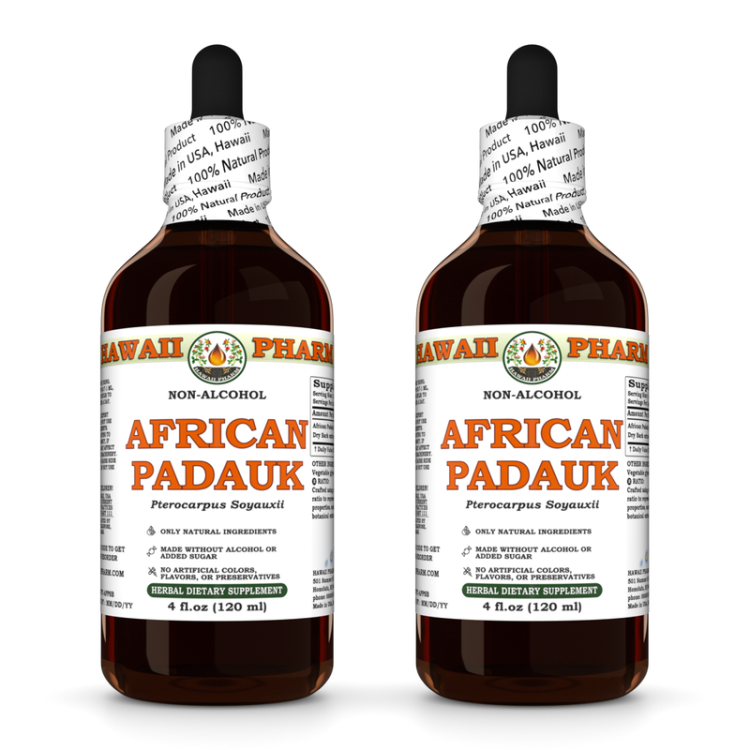
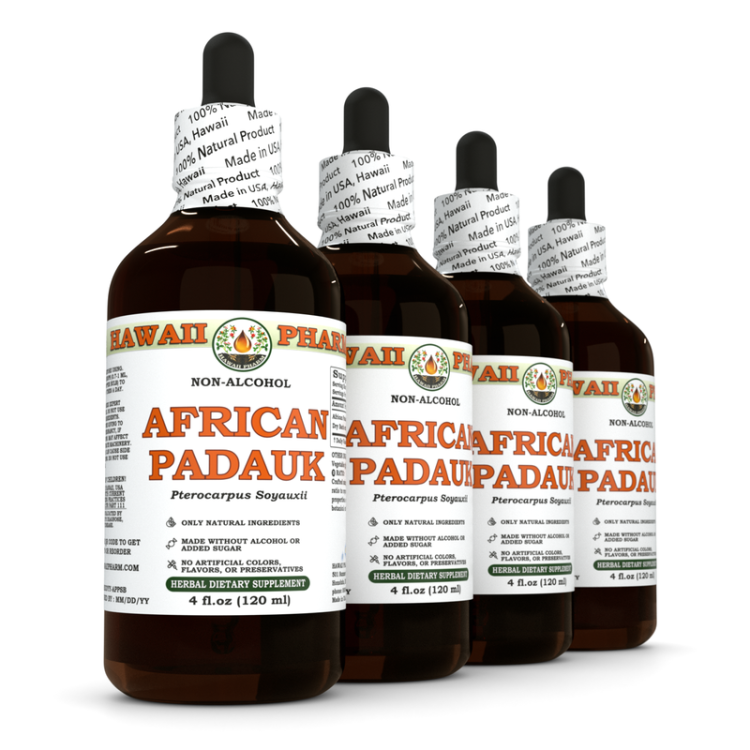
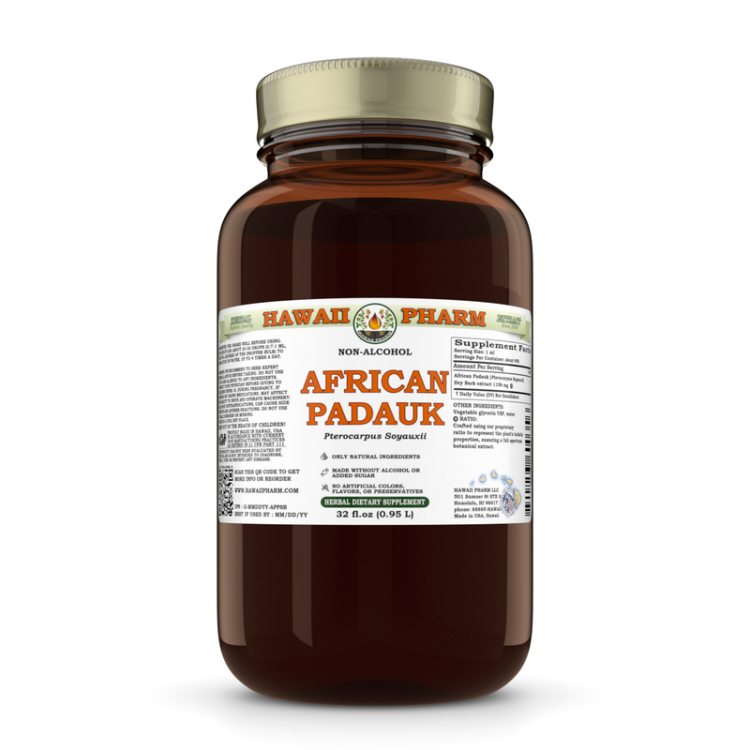
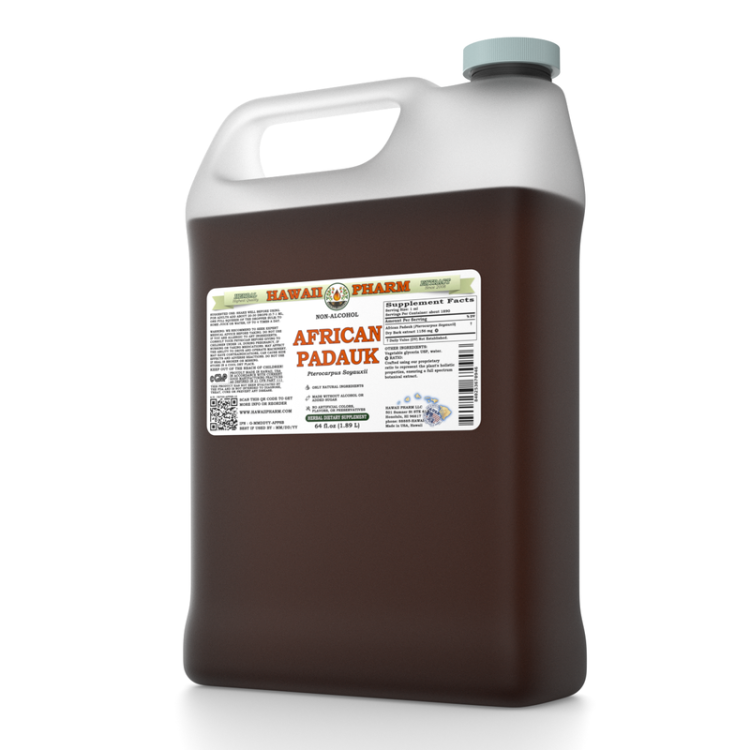
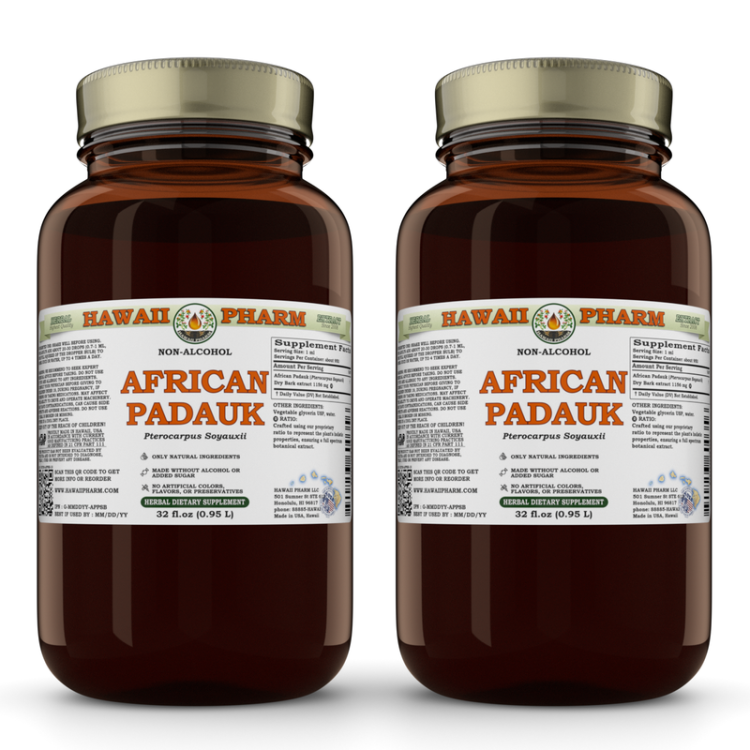
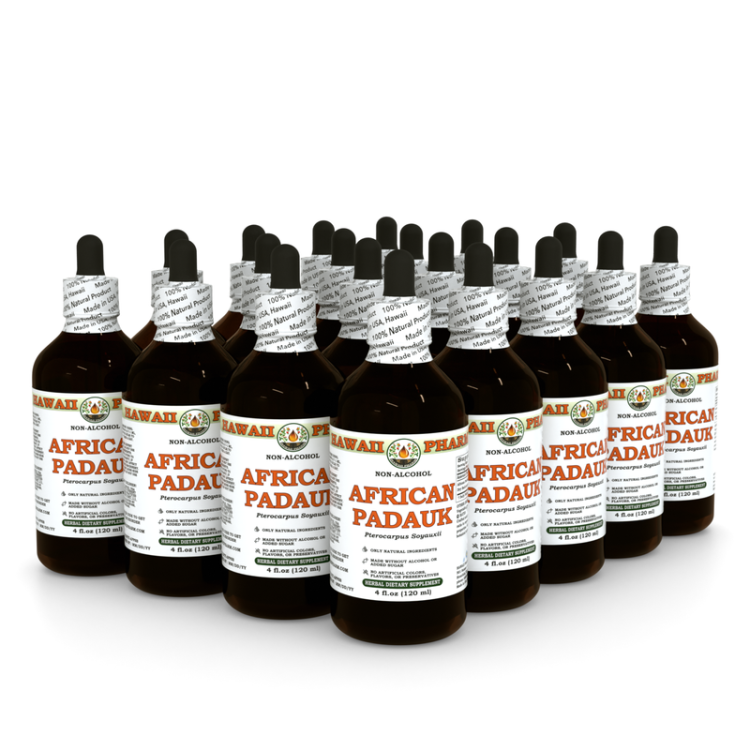
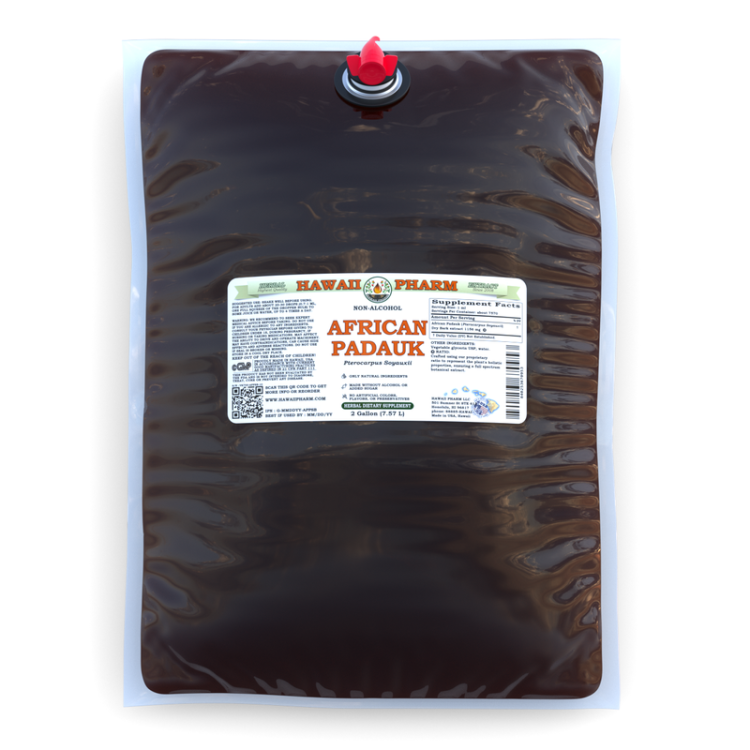
Common Name : African Padauk
Botanic Name : Pterocarpus Soyauxii
State / Part : Dry / BarkForm : African Padauk Liquid Drops / Extract
Process : Gentle Low-Heat ExtractionUPC : 840253600332
MPN : APPSB
SKU : african-padauk-nonalc-extract
Application : For internal use
Availability : In Stock
African Padauk (Pterocarpus soyauxii) bark — alcohol-free liquid extract (glycerite). Made in Hawaii, USA with domestic & imported ingredients.
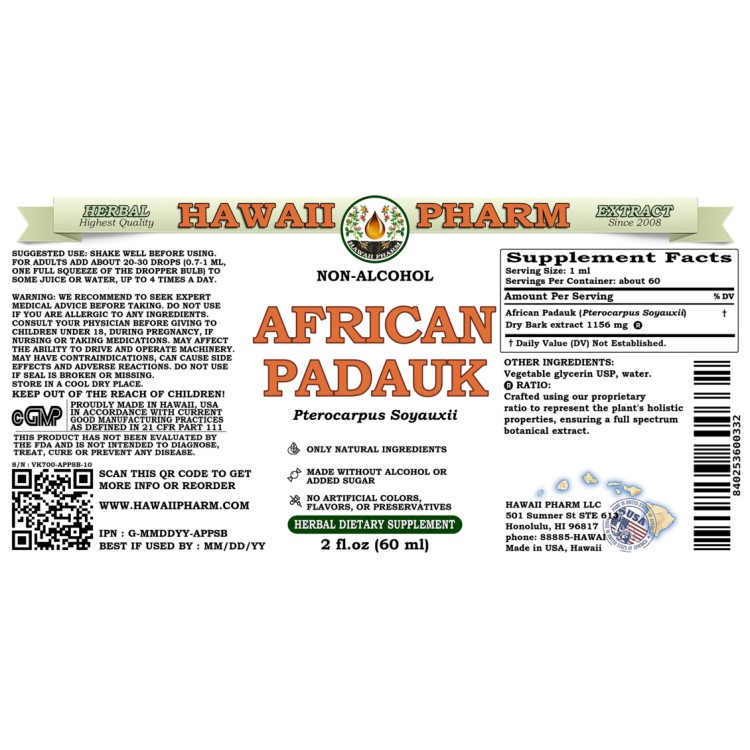
| Ingredients | Wild Harvested African Padauk (Pterocarpus Soyauxii) Dried Bark. Origin: Gabon. |
|---|---|
| Other ingredients | Vegetable glycerin, purified water. |
| Formulated without | Alcohol, gluten, fragrances, or any artificial and natural colors. |
| Suggested use | Shake well. 20–30 drops (about 0.7–1 ml, one full squeeze of the dropper) in 2 oz of water, tea or juice, up to 4 times a day or as directed by your practitioner. Glycerites may also be taken directly. |
| Storage | Do not use if the seal is broken or missing. Store in a cool, dry place. |
| Safety | Keep out of reach of children. If you are pregnant, nursing or taking medication, consult your doctor before use. Discontinue use if any adverse reaction occurs. |
| Large sizes | 32 oz jars may contain some plant material. No returns on 15x4 oz, 32 oz, 2x32 oz, 64 oz and 2 gal options. |
Important safety information - please read before use
Padauk has two specific cautions worth knowing before use.
- Allergy / sensitization: padauk is a well-known allergen - working with the wood or its dust can cause allergic skin rashes (contact dermatitis) and eye or breathing irritation, and it is classified as a "sensitizer." Do NOT use it if you are sensitive or allergic to padauk, and stop use if any rash, itching or breathing symptoms occur.
- Internal use: the oral use of padauk bark has not been well studied, so keep strictly to the suggested serving and to short-term use - do not take large amounts.
- Pregnancy / nursing: safety information is lacking, so consult a qualified healthcare practitioner before use; it is best avoided in pregnancy.
- Do not use it to self-treat any medical condition - see a qualified doctor instead. Do not give it to infants or young children. If you take any medication or have a medical condition, consult a qualified healthcare practitioner before use. Keep out of reach of children.
These statements have not been evaluated by the Food and Drug Administration. This product is not intended to diagnose, treat, cure, or prevent any disease.
| Name | Language | Note |
|---|---|---|
| Ngula | Central African Traditions | Refers specifically to the red cosmetic paste made from the bark. |
| Kisese | Chiluba/DRC | Traditional name in the Kasai region. |
| Fēizhōu zǐtán | Chinese (Pinyin) | Often classified within the 'Zitan' or 'Hongmu' category in furniture trade. |
| Coral Wood | Common Name | English common name |
| Camwood | Common Name | English common name |
| Muenge | Duala/Cameroon | Local name used in Cameroon regions. |
| Barwood | English | Historical trade name for red woods used in dyeing. |
| Mohingui | Equatorial Guinea | Regional vernacular name. |
| Mbel | Fang/Gabon | Regional name in Gabon. |
| Bois corail | French | Literally 'Coral wood' referring to the vibrant red color. |
| Padouk d'Afrique | French | Standard French common name. |
| Afrikanisches Korallenholz | German | Commonly used in European timber and botanical trade. |
| Legno Corallo | Italian | Used in the specialty timber industry. |
| Takula | Kongo | Traditional name for the red powder derived from the bark and heartwood. |
| Bosulu | Mongo/DRC | Local name in the Democratic Republic of the Congo. |
| Pau-sangue | Portuguese | Literally 'Blood-wood' used in African Lusophone countries. |
| Coral do Gabão | Portuguese | Specifically referring to the source origin in Gabon. |
| Afrirkanpaduk | Russian | Transliterated name used in woodworking. |
| Padauk de África | Spanish | Standard Spanish common name. |
Drawing on decades of botanical expertise, Hawaii Pharm determines the optimal herb-to-menstruum ratio for each specific botanical. This proprietary approach acknowledges that every plant species possesses unique technical characteristics and varying concentrations of natural compounds across harvests.
For African Padauk (Pterocarpus Soyauxii) Dry Bark Glycerite, we've perfected a precise extraction process that honors the distinctive profile of the raw material. Our master herbalists analyze each incoming batch and adjust extraction parameters accordingly, ensuring consistent quality despite natural variations in botanical sources. This customized approach reflects our company's accumulated knowledge and dedication to excellence over many years in the industry.
Extraction is performed at the lowest possible temperatures to preserve the maximum amount of bioactive compounds.
The extract is prepared with our signature blend of 40% purified water and 60% vegetable glycerin, creating a stable, alcohol-free liquid extract that preserves the botanical's natural integrity.
No sugar is added to this product. Its mildly sweet taste comes from vegetable glycerin.
- Organoleptic evaluation (color, consistency, aroma)
- FTIR and/or HPTLC spectral analysis for identity confirmation
- Microbiological testing (total plate count, E. coli, coliforms)
- Yeast and mold screening
- Viscosity measurement
- Refractometric analysis
Servings Per Container: 60
† Daily Value (DV) Not Established.
COAs are available upon request for customers with Wholesaler or Practitioner accounts.
To request a COA, please provide your order number and the batch number from the product label.
This policy helps us ensure traceability and maintain high standards of documentation for professional and bulk-use customers.
Each batch is manufactured with care. Best if used within 3 years of the manufacturing date when stored in a cool, dark place.

All Hawaii Pharm products are manufactured in our FDA registered facility in Hawaii, USA, with domestic & imported ingredients, following strict Good Manufacturing Practices (GMP). Our dedication to quality control ensures consistency and purity in every bottle.
We stand behind the quality of our African Padauk (Pterocarpus Soyauxii) Dry Bark Glycerite with our satisfaction guarantee. Each bottle contains the pure essence of natural botanical ingredients, expertly extracted without alcohol, preservatives, or synthetic additives.
To maintain optimal potency, store your African Padauk (Pterocarpus Soyauxii) Dry Bark Glycerite in a cool, dark, and dry place. When properly stored, this product maintains its quality for up to 4 years from the manufacturing date.
At Hawaii Pharm, quality is our foundation.
Every bottle of our African Padauk (Pterocarpus Soyauxii) Bark undergoes rigorous testing and quality control to ensure you receive only the finest botanical extract.

Rated 5-star by 5,000+ customers
99.8% positive feedback, all time
Selling on Amazon since 2010

Highest buyer ratings, since 2011
99% positive feedback in the last 12 months
Certified Top Rated - United States
10,000+ Reviews from Real Customers
My puppy had crystals in her, which was abnormal for a puppy, she was leaking urine all over the house... We had to put a diaper on her because she didn't even know she was leaking urine and it was causing her not to learn to potty train. I ordered this stuff and within a week, the crystals were ..
As advertised
RELIABLE
Love it! Great product, fast shipping from Hawaii to California
My dad puts this in his water everyday.
Excellent product and price!
A life saver for me
Most happy with product and delivery as well !!
Good seller and arrived on time.
Excellent Product. O:-)
HOW WE COLLECT & DISPLAY REVIEWS
Each product review covers three categories: the product itself, its packaging, and the shipping experience.
Reviews on this page come from our own store (customers with a completed order), Amazon and eBay.
As long as a review is made in good faith, it goes live — regardless of the rating. Reviews reflect their authors' personal experience and are not medical advice.
