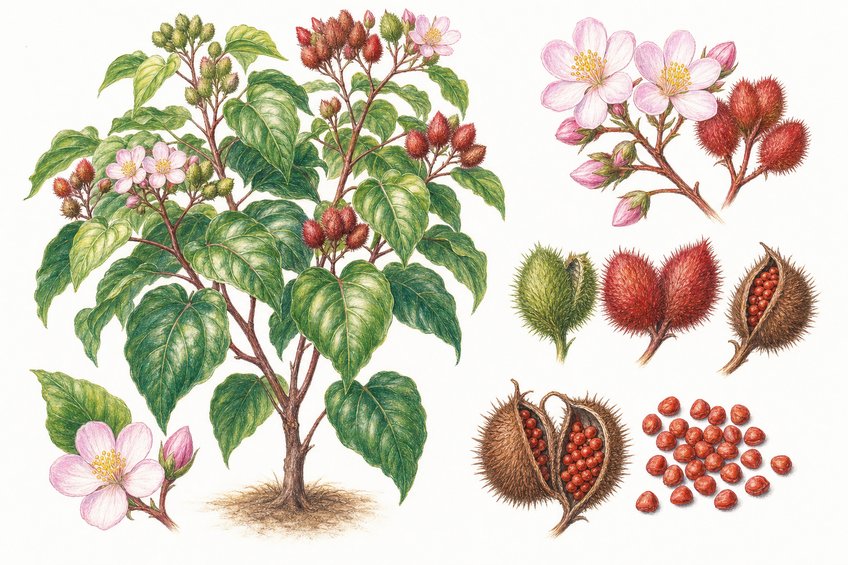
ANNATTO (BIXA ORELLANA): RED SEEDS, COLOR, AND LORE
In many tropical kitchens, a spoonful of annatto-tinted oil can turn a pot the color of a late summer sunset. Long before it colored cheddar cheese and butter, the red seed coat of Bixa orellana brightened faces, cloth, ceremonial objects, and stews across the American tropics.
A quick look at annatto
| Botanical name | Bixa orellana |
|---|---|
| Family | Bixaceae |
| Parts used | Seeds, especially the waxy red-orange seed coating |
| Other names | Annatto, achiote, bija, urucum, roucou, arnotto, lipstick tree |
| Native region | Tropical Americas, including parts of Central America, northern South America, and the Caribbean |
The little tree with red secrets
Annatto grows as a many-branched shrub or small tree, often 6 to 20 feet tall, with broad, heart-shaped leaves that feel slightly leathery between the fingers. When young, the stems can look reddish, as if the plant is already hinting at the color hidden in its pods.
The flowers are soft and papery, usually pale pink to white, with a small burst of yellow stamens in the center. After flowering, the plant forms bristly, heart-shaped capsules that ripen from green to red-brown and split open to reveal many small seeds packed in a brick-red coating.
Crush the fresh seeds and they stain the fingertips orange-red with a faint earthy smell, somewhere between dry clay, pepper skins, and warm cooking oil. That color clings, which is exactly why people noticed it.
The part people treasure
The useful color of annatto sits mostly in the thin, waxy coating around each seed. The hard inner seed matters less than the red-orange layer that rubs off on oil, water, hands, baskets, and cooking pots.
In home kitchens, the seeds are often warmed gently in oil until the oil glows orange, then strained away. In other traditions, the seed coating was pounded into a paste with water, fat, spices, or clay, depending on whether it was meant for food, body paint, or dye work.
From rainforest paint to golden cheese
Indigenous peoples throughout the tropical Americas knew annatto well. Among Tupi-Guarani speaking peoples of Brazil, urucum was used as a red body pigment; in the Caribbean, Taíno communities used related red plant colors in adornment and daily life; in Mesoamerica, the Nahuatl word achiotl gave us the familiar kitchen name achiote.
Spanish chroniclers and later European travelers wrote about the red seeds with curiosity. The plant traveled with trade routes into West Africa, South Asia, and the Philippines, where it slipped easily into warm-climate cooking.
One old kitchen nickname for annatto is "poor man's saffron," a phrase that tells a practical story. Saffron was costly, but annatto could lend a cheerful golden color to rice, stews, sauces, and oils without the same expense.
In British and American dairy history, annatto found a different calling. Cheesemakers used it to even out the color of cheese through the year, especially when winter milk lacked the golden tone that came from cows grazing on spring and summer pasture. An old dairy saying, "June grass makes golden butter," helps explain why annatto became useful when June grass was gone.
Where annatto feels at home
Bixa orellana is native to the humid tropics of the Americas, with deep roots in the Caribbean basin, Central America, and northern South America. Today it grows across many tropical regions, including Brazil, Peru, Mexico, India, Sri Lanka, the Philippines, parts of West Africa, and Pacific islands.
The plant likes heat, sun, and a long growing season. It tolerates periods of dryness once established, though it gives its best pods where warmth and moisture arrive regularly.
In a tropical garden, annatto can look almost ornamental: pink blossoms above glossy leaves, then red, prickly pods hanging like tiny sea urchins from the branches. Birds may perch nearby, but the seeds often depend on people for their widest travels.
What gives annatto its color?
Annatto's main pigments are carotenoids, especially bixin and norbixin. Bixin dissolves more readily in oil, while norbixin is more water-friendly, which is why annatto can be prepared in different ways for different uses.
The seeds also contain smaller amounts of other carotenoids and plant compounds, along with fatty material in the seed coat. These constituents help explain annatto's long career as a natural colorant in foods, textiles, cosmetics, and craft traditions.
Did you know?
Annatto is one of the familiar natural colorants behind orange cheeses, golden butter, snack coatings, sauces, and seasonings. Its food-color codes appear as E160b in some labeling systems, though many cooks simply know it as achiote.
Growing, gathering, and the red-stained harvest
Annatto can be grown from seed in warm climates, though fresh seed germinates more readily than old seed. It prefers full sun, well-drained soil, and shelter from frost.
Growers harvest the capsules when they are mature and beginning to dry, but before they split wide and scatter their contents. Once dry, the pods are cracked open and the seeds are shaken, rubbed, or sifted free.
The work is simple, but it is not tidy. Anyone who has handled a basket of annatto seeds knows the color creeps into fingernails, cloth, and wooden tools, leaving the harvest marked in red-orange dust.
Folklore in the color red
Because annatto stains so boldly, people often read meaning into its color. In parts of Amazonia, red body paint made with urucum carried social, ceremonial, and practical meaning, changing with the community, the occasion, and the pattern applied.
Caribbean and Latin American cooks have their own kind of folklore around achiote: "the eye eats first." A pale pot of rice can look unfinished, while annatto gives it the warm color many families associate with Sunday food, festival food, and a grandmother's hand at the stove.
There is also a bit of almanac wisdom in annatto's cheese story. Before modern standardization, the color of dairy foods changed with pasture, season, and fodder; annatto helped winter cheese resemble the rich color of summer milk.
A final look at the lipstick tree
Annatto is easy to overlook until a pod opens. Then the plant offers a small surprise: a handful of plain seeds wrapped in color strong enough to travel from rainforest paths to kitchen shelves, cheese rooms, and dye pots around the world.
References
- Kew Science, Plants of the World Online. Bixa orellana L. Royal Botanic Gardens, Kew.
- Morton, J. F. Fruits of Warm Climates. Creative Resource Systems, 1987.
- Food and Agriculture Organization and World Health Organization. Joint FAO/WHO Expert Committee on Food Additives specifications for annatto extracts.
- Leung, A. Y., and Foster, S. Encyclopedia of Common Natural Ingredients Used in Food, Drugs, and Cosmetics. Wiley, 1996.
- Janick, J., and Paull, R. E., editors. The Encyclopedia of Fruit and Nuts. CABI, 2008.
Explore our Annatto products (glicerat) in the HawaiiPharm store.
Explore our Annatto products (tincture) in the HawaiiPharm store.