Herb & Plant Profiles
AIR YAM: A COMPREHENSIVE OVERVIEW
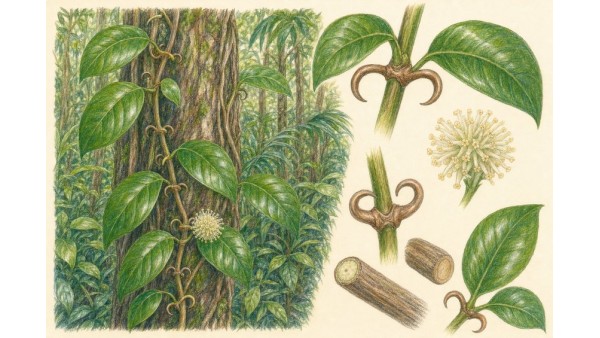
Dioscorea bulbifera, commonly known as the air yam or the aerial yam, is a type of tuberous vine that is a member of the Dioscoreaceae family. The plant is renowned for its distinct growth habit, producing aerial tubers or bulbils in the leaf axils.
Read more
CRIMSON CLOVER: A BOTANICAL MARVEL
Crimson Clover, or Trifolium incarnatum, is a captivating annual Clover known for its vibrant red flowers that have graced meadows and gardens for centuries. Its botanical characteristics, rich chemical composition, historical facts, and health benefits make it a remarkable plant.
Read more
RHODIOLA ROSEA - ALL WE NOW ABOUT IT
An alcohol-based or alcohol-free extracts of rhodiola is used in scientific medicine as a stimulant of the central nervous system, in asthenic and neurasthenic conditions, increased fatigue, decreased performance, in psychiatry, in functional diseases of the nervous system, in the rehabilitation period after somatic and infectious diseases, as well as in practically healthy people with reduced performance.
Read more
RHODIOLA, GOLDEN ROOT
Rhodiola rosea (commonly golden root, rose root, roseroot, Aaron's rod, Arctic root, king's crown, lignum rhodium, orpin rose) is a perennial flowering plant in the family Crassulaceae. It grows naturally in wild Arctic regions of Europe (including Britain), Asia, and North America and can be propagated as a groundcover.
Read more
WHAT IS PYCNOGENOL?
Pycnogenol is a French maritime pine bark extract produced from the outer bark of Pinus pinaster Ait. subsp. atlantica.
Read more
GOLDEN TURMERIC
In 2022 spice exports from India amounted to USD $3.93 billion. Spices are one of the main wealth of this country and 76 percent of all spices in the world are produced in India. At the same time, the inhabitants of this country in East Asia are also the main consumers of spices.
Read more
MALVA PROFILE
Malva is a plant from the Malvaceae family, that has large bright pink flowers The herb contains polysaccharides, alkaloids, flavonoids, tannins, fatty acids (malvic and sterculous), vitamin A and C, carotenoids. The flowers contain the coloring anthocyanins. The seeds contain up to 18% fatty oil.
Read more
GRAPE SEED EXTRACT AND GRAPE SEED OIL
Do you consume grapes with seeds? Whole grape seeds irritate the stomach and intestines, but as a meal or extract, they are a useful product, that has a number of beneficial properties. Grape seeds contain a large number of trace elements: calcium, magnesium, iron, sodium, potassium. Vitamins: A, B1, B2, B5, B6, C, E, K, PP, folic acid, chlorophyll. Grape seed oil contains the most powerful natural antioxidant known to science, procyanidine. Fatty acids in grape oil: linoleic acid, oleic acid, palmitic acid, stearic acid, palmitoleic acid, linolenic acid, arachidic acid. It cannot be synthesized in the human body and must be supplied with food. Grape seed oil is a good source of it.
Read more
THE POWER OF ROSEMARY
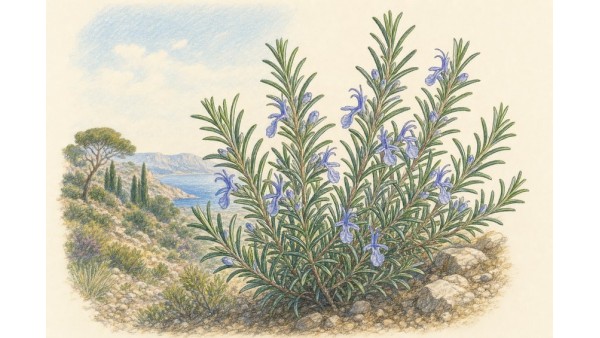
Rosemary belongs to the classic spicy plants. Its medicinal properties were noticed by the ancient Greeks and Romans. They added this spice to food to relieve anxiety, treat stomach upsets, and stimulate digestion. Rosemary contains: vitamins A, B1, B2, B4, B6, B9, C, K, PP macro-, microelements (calcium, potassium, sodium, magnesium, phosphorus, iron, zinc, manganese, selenium, copper) fatty, amino acids (oleic, linoleic, palmitic, valine, lysine, tryptophan, etc.) tannins essential oil
Read more