RUE
COMMON NAME: Rue
LATIN NAME: Ruta Graveolens
HINDI NAME: Sudapa, Sadab
ORIGIN: Southern Europe, Mediterranean Region
HABITAT: Western Asia, Mediterranean Region, Africa, Southern Europe. The plant grows on dry, usually stony and gravelly slopes and rocks. In some countries, Rue is cultivated as a decorative, medicinal, and ethereal plant.
BOTANICAL INFORMATION: Fragrant rue (lat. Ruta graveolens) - a species of the genus rue (lat. Ruta) of the subfamily proper ruta (lat. Rutoideae), a family (lat. Rutaceae). The genus includes seven species, among which there are herbs or shrubs.
Rue is a perennial herb with a pronounced smell. It has a very firm stem and can reach a height of seventy centimeters. The plant has very interesting leaves- if to shine them through, it seems that they are all dotted with small holes. These points are glands with essential oil.
The flowers have green-yellow color. The fruit is a spherical tetrathecal box. Rue blooms in June - July.
Insects, usually small flower flies, pollinate the plant. This spice has a unique adaptations to cross pollination at the root are the ability of stamens and stalks to make certain movements during flowering, as a result of which they take a different position during this process.
CHEMICAL COMPOSITION: Rue leaves contain essential oil, flavocolrutin, alkaloids, furonumarin, furocoumarins, xanthoxine, rutin, coumarin , umbelliferone, bergapten, flavonoids - rutin, quercetin, as well as organic acids (malic, valerianic) and vitamin C.
HISTORY:
Even the ancient Greeks knew this spicy Indian plant. According to some historical facts, the Greek philosopher Socrates, treated one of his friends to cheese with a Rue root.
*Be sure to follow relevant directions on product labels and consult with your pharmacist or physician or other healthcare professional before using.

HEATHER
Heather grows not only in Europe, it can be found in Asia, North Africa and North America, on the Azores and the desert expanses of Greenland. Loneliness is not for Heather, it thrives in large thicke..
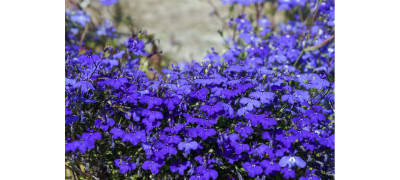
BEAUTIFUL LOBELIA
Lobelia is found in eastern and central America and some parts of Canada. It grows in open, sunny places along the roads. It is an annual herbaceous plant 40–90 cm tall, with a fine-leafed root system..

BLACK GOLD
Everyone knows that chocolate is made from cacao. Do you know which health benefits cacao has? Hawaii Pharm describes main information about this plant...

CAT'S CLAW OR UNA DE GATO
Cat’s Claw (lat. Uncaria Tomentosa) Cat's Claw is a large woody vine that sometimes reaches heights of 100 feet. Native to the Amazon rainforest and other places in South and Central America...

CALENDULA: QUEEN OF HERBS?
Calendula, or Calendula officinalis, is a perennial herbaceous plant that belongs to the Asteraceae family, it is also often referred to as a marigold...