When Marco Polo described a plant in the late 1200s that looked like saffron but was not saffron, he was likely marveling at turmeric - the humble underground rhizome that can turn a pot of rice, a cotton cloth, or a fingertip the color of sunset.
Quick Facts About Turmeric
| Botanical name | Curcuma longa L. |
|---|---|
| Family | Zingiberaceae - the ginger family |
| Genus | Curcuma |
| Plant type | Tropical herbaceous perennial |
| Parts used | Rhizome, fresh or dried and powdered |
| Other names | Indian saffron, haldi, jiang huang, ukon, turmeric root |
| Native region | Tropical South Asia, with a long history of cultivation across India and Southeast Asia |
What Is Turmeric?
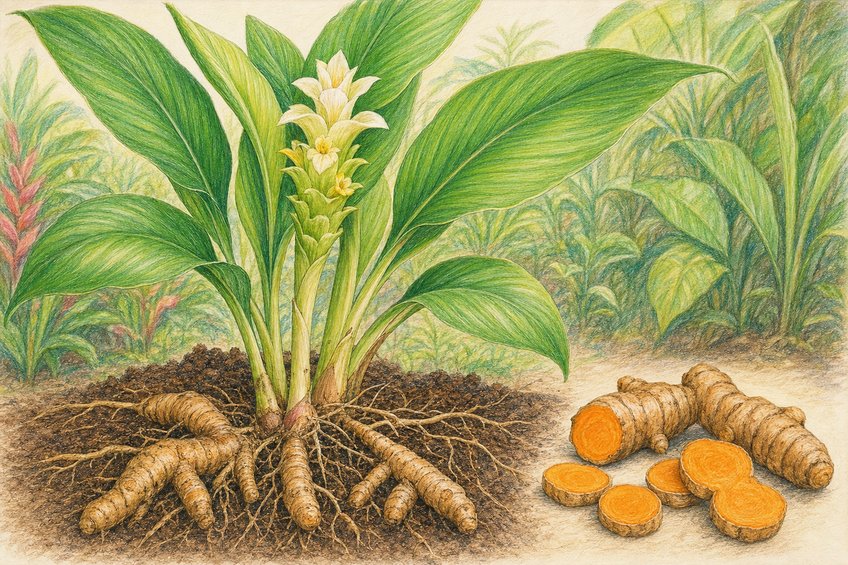
Turmeric is a leafy tropical plant in the ginger family, closely related to ginger and cardamom. Above ground, it grows in lush green clumps, with broad, lance-shaped leaves that unfurl from pale green pseudostems like folded fans after warm rains.
The plant can reach 2 to 4 feet tall in favorable conditions. Its flowers are tucked among thick, cone-like bracts, often pale green with creamy white, yellow, or lightly pink tones depending on the variety and growing conditions.
The real treasure sits below the soil. Break open a fresh turmeric rhizome and the inside glows deep orange-gold, damp and dense, with a warm earthy scent that hints at ginger, pepper, carrot, and rain-soaked clay. It stains quickly, as any cook with golden fingertips can tell you.
A Journey Through Time
In India, turmeric was woven into cooking, cloth dyeing, and ceremony. Sanskrit and later Ayurvedic texts referred to it by names such as haridra, and traditional practitioners used the rhizome in household preparations, beauty pastes, and seasonal kitchen formulas.
Turmeric also held a bright place in weddings and rites of passage. In many Hindu communities, haldi paste was applied during pre-wedding ceremonies as a symbol of blessing, beauty, and auspicious beginnings - a golden mark for a golden threshold.
In Chinese tradition, turmeric was known as jiang huang, or "yellow ginger." Traditional Chinese herbalists prepared it in formulas connected with movement and warmth, while Southeast Asian cooks and healers used it in foods, dyes, and aromatic pastes.
European awareness grew through trade. Early modern herbals and apothecary lists described turmeric under names such as "terra merita," and English readers came to know it as a saffron-like coloring spice. As the old saying goes, "All that glitters is not gold" - but turmeric came remarkably close in the kitchen.
Where in the World Does It Grow?
Turmeric is believed to have arisen from long cultivation in tropical South Asia, especially the Indian subcontinent and neighboring parts of Southeast Asia. Because the plant has been moved, selected, and replanted by people for so long, its exact wild origin is difficult to pin down.
Today it is cultivated throughout warm, humid regions of the world, including India, Sri Lanka, Bangladesh, Myanmar, Thailand, Indonesia, China, parts of Africa, the Caribbean, Central and South America, and Hawaii. It prefers rich, well-drained soil, steady moisture, filtered sun to full sun, and a long frost-free season.
The Rhizome - A Closer Look
The part most people call "turmeric root" is botanically a rhizome, a swollen underground stem. It grows in branching fingers from a central mother rhizome, wearing a thin tan skin that hides the orange interior.
Fresh turmeric feels firm and slightly waxy. Slice it, and the cut surface looks almost lacquered, with rings and fibers radiating through the flesh. Dried turmeric is harder and more concentrated in aroma, and once ground into powder it becomes one of the most recognizable yellow spices in the world.
What's Inside Turmeric?
Turmeric's famous color comes largely from curcuminoids, a group of natural pigments that includes curcumin, demethoxycurcumin, and bisdemethoxycurcumin. These compounds are responsible for much of the rhizome's golden-orange hue.
The rhizome also contains aromatic volatile oils, including ar-turmerone, alpha-turmerone, beta-turmerone, zingiberene, and other sesquiterpenes. Alongside these are starches, fiber, small amounts of protein, sugars, minerals, and other plant compounds that give turmeric its texture, fragrance, and culinary character.
Did You Know?
Turmeric is a strong natural dye. A pinch can color rice, mustard, pickles, robes, and paper - and it can leave a cheerful yellow mark on a cutting board long after supper is finished.
From Garden to Harvest
Growers plant pieces of mature rhizome, much as gardeners plant ginger. In warm soil, buds wake and send up leafy shoots; after about 8 to 10 months, the leaves begin to yellow and dry back, signaling that the rhizomes have filled out underground. Harvesters lift the clumps, wash away the soil, and often boil or steam the rhizomes before drying them, a traditional step that helps develop their familiar color and keeping quality.
Folklore, Kitchen Wisdom, and Fun Facts
Colonial American and pioneer households valued imported spices carefully, and turmeric found a practical place in pickles, relishes, and mustard. It offered color when saffron was too costly, proving the old American phrase "worth its weight in gold" could apply to a pantry jar as easily as a prospector's pouch.
British country gardeners often repeated the wisdom, "Feed the soil, not the plant." Turmeric seems to agree. Give it loose, compost-rich earth and summer warmth, and the underground rhizomes quietly do their work out of sight.
Farmers' almanac traditions often placed root crops and underground work in the dark or waning of the moon. Whether followed as faith, rhythm, or family custom, that moon-wise habit suited turmeric nicely: the best part of the plant grows hidden in the dark.
- Turmeric is a member of the same family as ginger, cardamom, and galangal.
- India remains the world's leading producer and consumer of turmeric.
- The brilliant pigment can shift color in alkaline conditions, turning from yellow toward reddish-brown - a bit of kitchen chemistry in plain sight.
A Golden Note of Appreciation
Turmeric reminds us that some of the plant world's brightest gifts grow underground, away from easy view. A green clump in the garden may look modest all summer, yet beneath the soil it is storing sunlight as gold - quiet, earthy, and wonderfully alive.
References
- Plants of the World Online, Royal Botanic Gardens, Kew: Curcuma longa L.
- USDA Germplasm Resources Information Network (GRIN): Curcuma longa taxonomy.
- Flora of China: Zingiberaceae and Curcuma botanical descriptions.
- Ravindran, P. N., Nirmal Babu, K., and Sivaraman, K., editors. Turmeric: The Genus Curcuma. CRC Press, 2007.
- Marco Polo. The Travels of Marco Polo, historical accounts of Asian trade goods and spices.
- Gerard, John. The Herball or Generall Historie of Plantes, 1597, early English herbal references to imported spices and coloring plants.
Where to Find Turmeric
Explore our Turmeric products in the HawaiiPharm store.